
Spanish recipe
Fabada Asturiana
Asturias’s famous bean stew slowly cooks large white fabes with cured pork, chorizo, morcilla and saffron until the beans are buttery and the broth naturally creamy. The pot is moved gently rather than stirred, then rests before serving so the starch and pork juices settle together.
Asturias, Spain

01
Ingredients
- 400 g
dried Asturian fabes or other large thin-skinned white beans
- 200 g
Asturian chorizo
- 200 g
Asturian morcilla
- 200 g
lacón or cured pork shoulder
- 100 g
slab pancetta or streaky bacon
- 150 g
yellow onion, peeled and left whole
- 0.1 g
saffron threads
- 2.5 L
cold water, plus more for soaking
- 4 g
fine salt, plus more only after tasting
02
Method
- 01
Soak the beans and cured pork
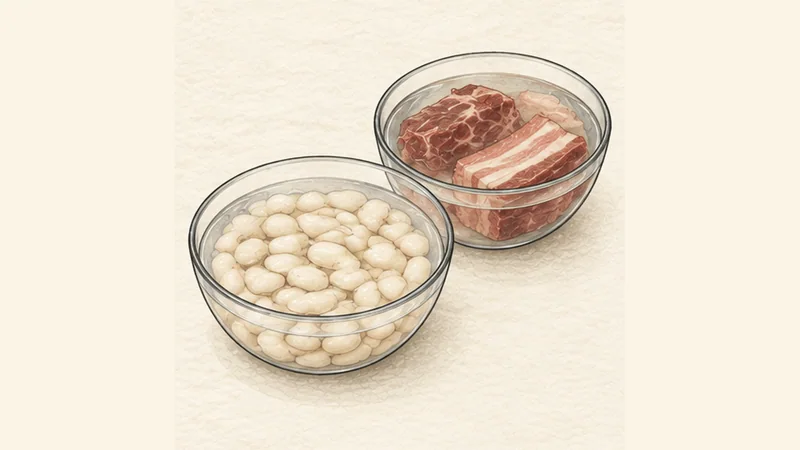
Cover the beans generously with cold water and soak for 8 hours. In a separate bowl, soak the lacón and pancetta in lukewarm water for the same 8 hours to remove excess surface salt. Drain both before cooking.
Cooking-step illustration, not a photograph - 02
Bring the beans up slowly and skim
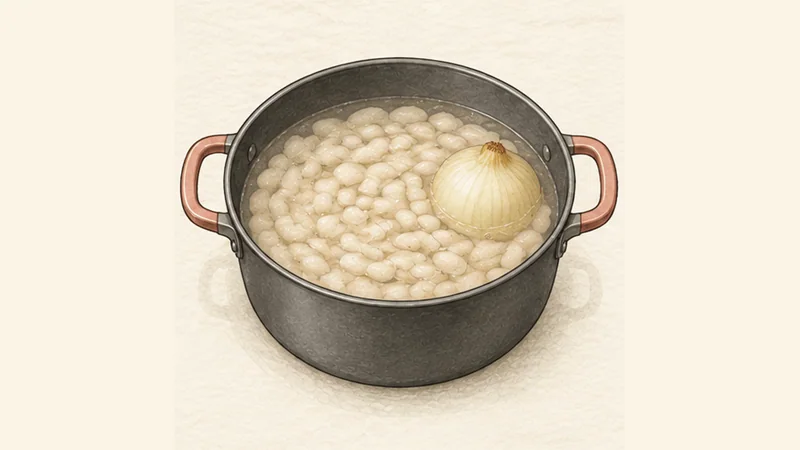
Put the drained beans in a wide heavy pot with the whole onion and 2.5 L cold water. Bring gradually to a boil over about 20 minutes. Skim foam from the surface, then reduce immediately to the gentlest steady simmer.
Cooking-step illustration, not a photograph - 03
Slow-cook with lacón and pancetta
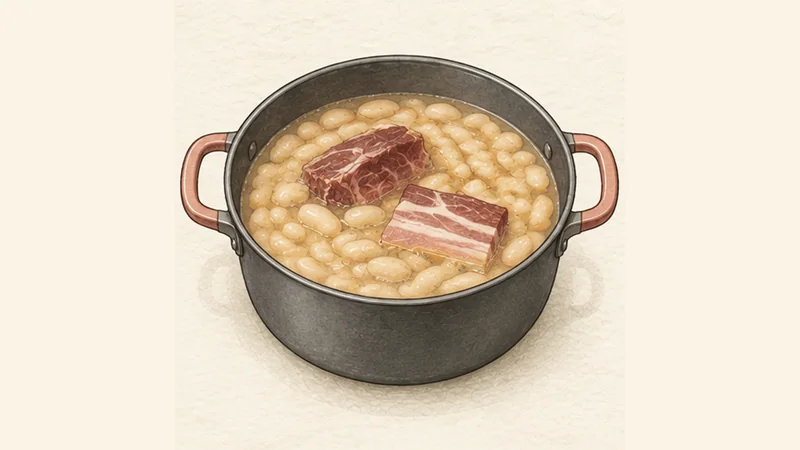
Add the soaked lacón and pancetta. Partially cover and simmer very gently for 1 hour 45 minutes. Every 30 minutes, move the pot in a small circular motion instead of stirring; if the beans become exposed, add just enough cold water to cover them again.
Cooking-step illustration, not a photograph - 04
Add saffron, chorizo and morcilla
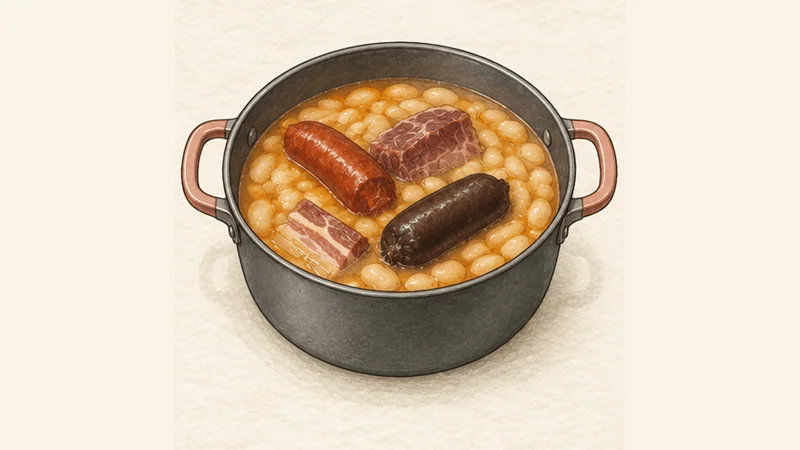
Crush the saffron between your fingers and add it with the whole chorizo and morcilla. Simmer another 25–30 minutes, still very gently, until the beans are buttery all the way through and the sausages are hot at the centre.
Cooking-step illustration, not a photograph - 05
Adjust the broth and remove the onion
Taste only after the cured meats have finished seasoning the pot. Add up to 4 g salt if needed. Remove the whole onion. If the broth is thin, simmer uncovered 5–10 minutes; if it is already creamy enough to coat the beans lightly, leave it as it is.
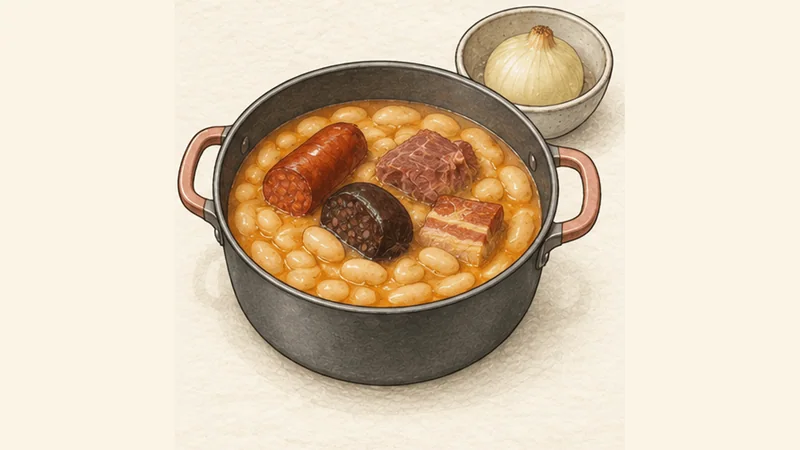
Cooking-step illustration, not a photograph - 06
Rest, slice the compango and serve
Remove the pot from the heat and rest 30 minutes. Lift out the lacón, pancetta, chorizo and morcilla, cut them into serving pieces, then either return them to the beans or serve them alongside. Rewarm gently if the stew falls below serving temperature.
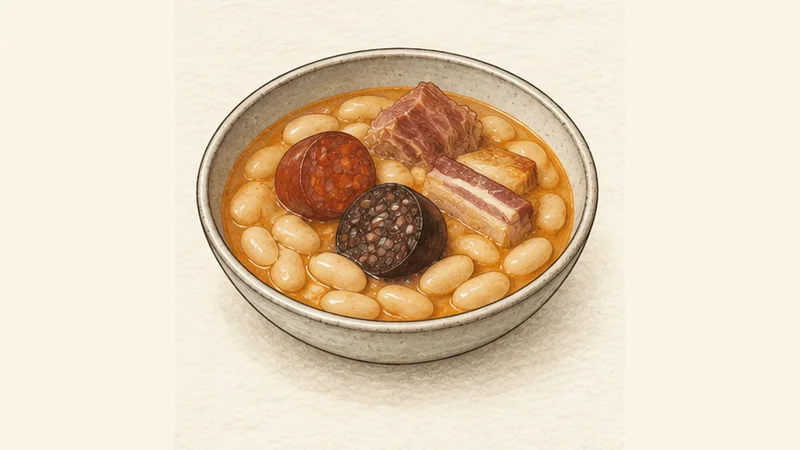
Cooking-step illustration, not a photograph


03
Sources and photo credit
This standardized method was independently rewritten after cross-checking the references below. Recipe Nest Vault does not claim that the credited photographer cooked from this exact version.
Recipe references
Fabada en cazuela de barro — Photograph by Juan J. Martínez from Valencia, España; CC BY-SA 2.0.
Step illustrations: Original illustrations created by Recipe Nest Vault with OpenAI image_gen.
More Spanish recipes
More Spanish recipes

1 hr 35 min
Paella Valenciana

50 min
Tortilla Española

2 hr 20 min