
Spanish recipe
Marmitako
A Basque fishermen’s stew of meaty bonito or tuna, potatoes, peppers and tomato. The vegetables and potatoes cook first in fish stock; tuna is added only for the final few minutes so it stays juicy while potato starch gives the broth body.
Basque Country, Spain

01
Ingredients
- 800 g
bonito del norte or fresh tuna loin, cut into 3 cm cubes
- 800 g
waxy potatoes, peeled and broken into 4 cm chunks
- 200 g
yellow onion, finely chopped
- 200 g
green pepper, cut into 1 cm dice
- 150 g
roasted red pepper, peeled and drained
- 300 g
ripe tomatoes, finely chopped
- 2 cloves
garlic, finely chopped
- 60 ml
extra-virgin olive oil
- 100 ml
dry white wine
- 1.2 L
unsalted fish stock, kept hot
- 4 g
sweet Spanish paprika
- 10 g
flat-leaf parsley, finely chopped
- 8 g
fine salt, divided
02
Method
- 01
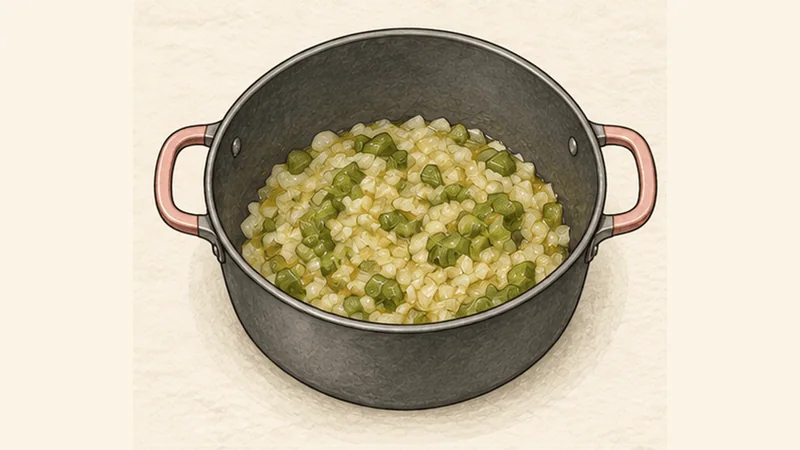
Build the onion and pepper base
Heat 60 ml olive oil in a wide heavy pot over medium-low heat. Add onion, green pepper and 2 g salt and cook 10–12 minutes, stirring occasionally, until very soft and sweet but only lightly coloured.
Cooking-step illustration, not a photograph - 02
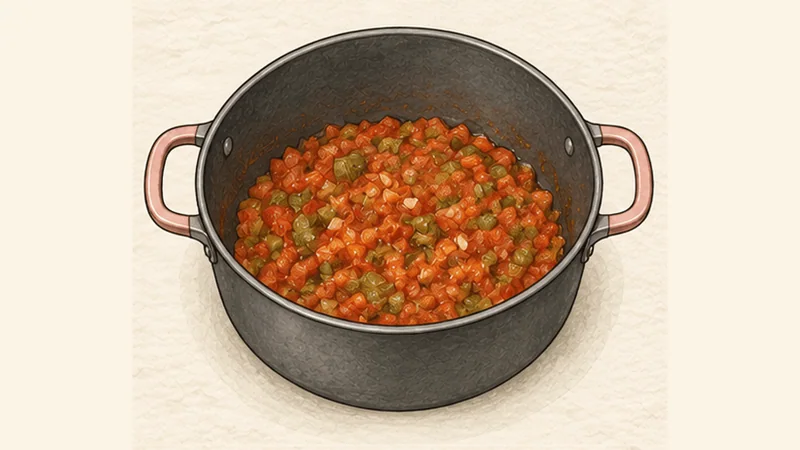
Cook the garlic, tomato and paprika
Add garlic and cook 45 seconds. Add tomatoes and cook 8 minutes until reduced. Stir in paprika for 15 seconds, pour in the 100 ml wine and simmer 3 minutes until the raw alcohol aroma fades.
Cooking-step illustration, not a photograph - 03
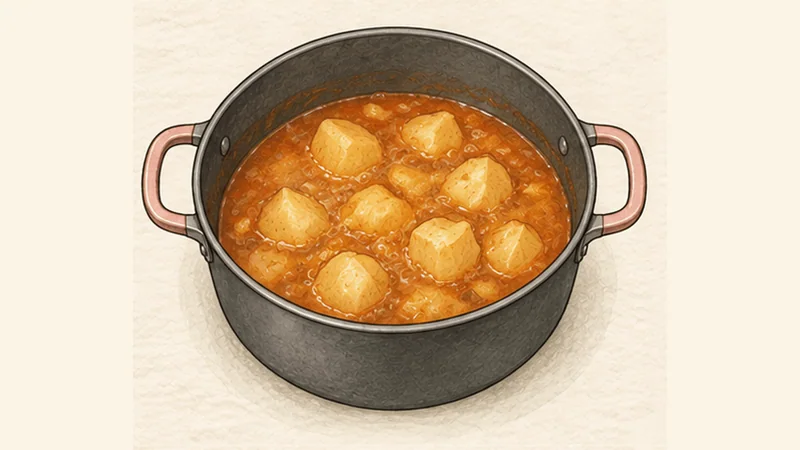
Simmer the broken potatoes in stock
Add the 800 g potatoes and turn for 2 minutes to coat them. Pour in 1 L of the hot fish stock, reserving 200 ml, and add 3 g salt. Simmer gently uncovered for 18–22 minutes until the potatoes are almost tender. Crush two or three potato edges against the pot to give the broth light body.
Cooking-step illustration, not a photograph - 04
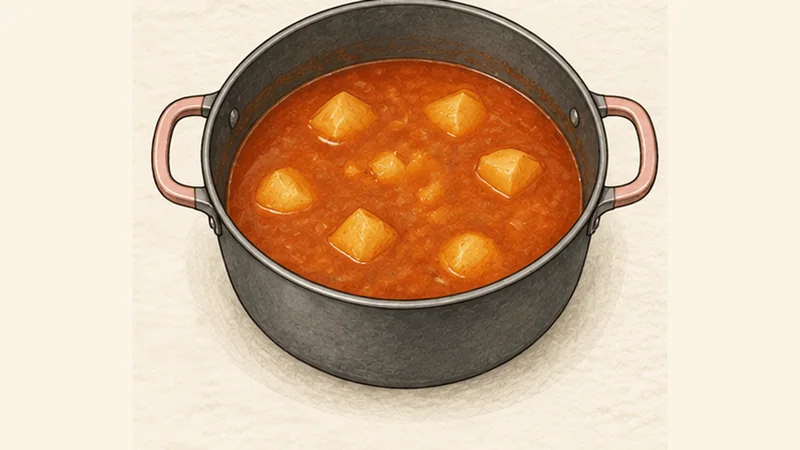
Blend in the roasted red pepper
Blend the 150 g roasted red pepper with 100 ml of the reserved hot stock until smooth. Stir it into the stew and simmer 5 minutes. If the broth is thicker than a light stew, add the final 100 ml stock; taste and use the remaining 3 g salt only if needed.
Cooking-step illustration, not a photograph - 05
Add the tuna only at the end
Lower the stew to the gentlest simmer and add the 800 g tuna cubes in one layer. Cook 4–5 minutes, turning once very carefully, until the outside is opaque and the thickest pieces reach 63°C. Remove from the heat immediately.
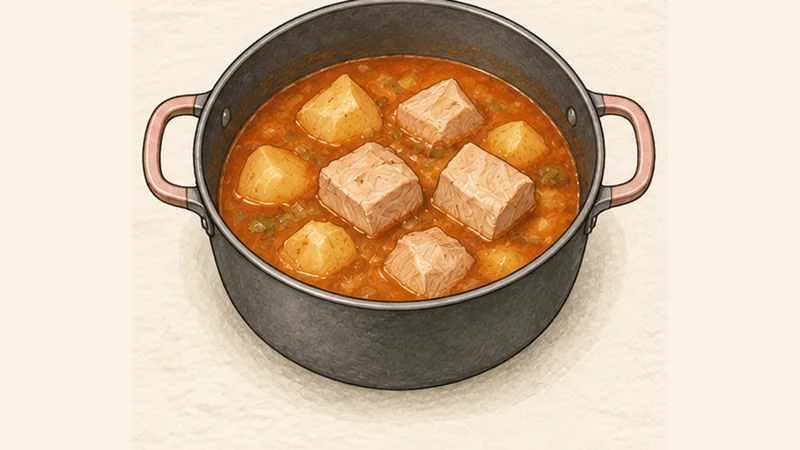
Cooking-step illustration, not a photograph - 06
Rest briefly and finish with parsley
Rest the marmitako off the heat for 5 minutes so the tuna finishes gently in residual heat and the potato starch settles into the broth. Sprinkle with the 10 g parsley and serve hot without further boiling.
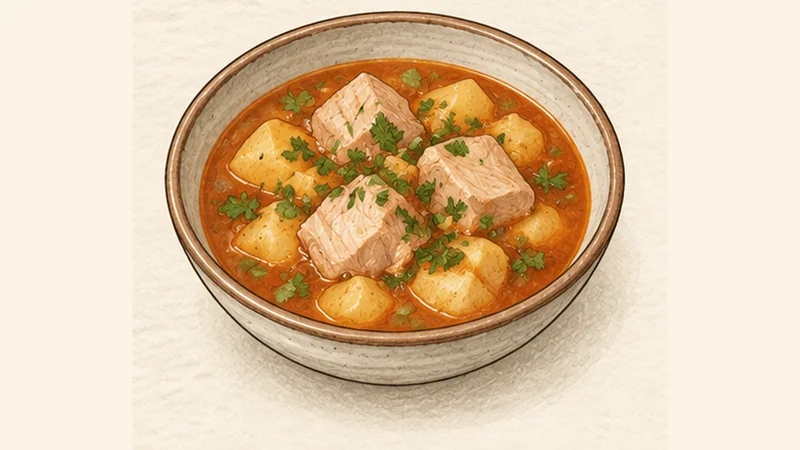
Cooking-step illustration, not a photograph


03
Sources and photo credit
This standardized method was independently rewritten after cross-checking the references below. Recipe Nest Vault does not claim that the credited photographer cooked from this exact version.
Recipe references
Marmitako de atún (España) — Photograph by Juan Emilio Prades Bel; CC BY-SA 4.0.
Step illustrations: Original illustrations created by Recipe Nest Vault with OpenAI image_gen.
More Spanish recipes
More Spanish recipes

1 hr 35 min
Paella Valenciana

50 min
Tortilla Española

2 hr 20 min