
Korean recipe
Chicken kalguksu
Hand-cut wheat noodles cook directly in a clear chicken broth with shredded thigh meat, potato, zucchini, onion, and scallions.
South Korea

01
Ingredients
- 400 g
all-purpose flour, plus 40 g for dusting
- 185 ml
water for noodle dough
- 10 g
fine salt, divided
- 10 ml
neutral oil for dough
- 1.2 kg
bone-in skin-on chicken thighs
- 2.5 L
cold water for chicken broth
- 250 g
yellow onion, divided
- 30 g
garlic cloves, crushed
- 20 g
fresh ginger, sliced
- 250 g
waxy potato, 5 mm half-moons
- 220 g
zucchini, 5 mm half-moons
- 60 g
scallions, diagonally sliced
- 25 ml
Korean soup soy sauce
- 2 g
black pepper
02
Method
- 01
Hydrate the noodle dough
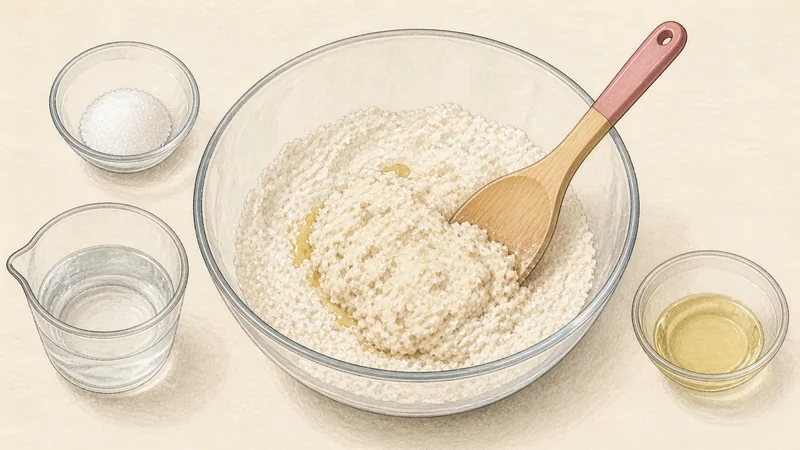
Dissolve 5 g salt in 185 ml water. Add to 400 g flour with 10 ml oil and mix until every dry patch becomes a rough, firm dough; do not add extra water yet.
Cooking-step illustration, not a photograph - 02
Knead until smooth
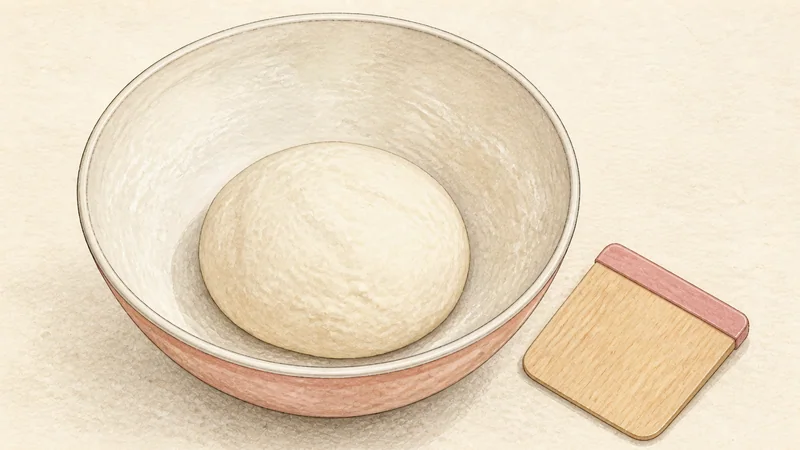
Knead for 8–10 minutes, pressing with the heel of the hand, until smooth and elastic. If dry crumbs remain after 3 minutes, wet hands once rather than pouring water into the dough.
Cooking-step illustration, not a photograph - 03
Rest the dough twice
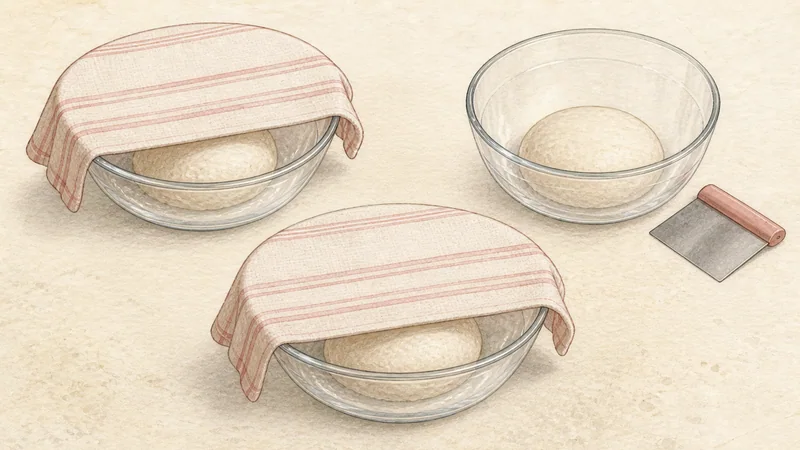
Cover and rest 20 minutes, knead 1 minute, then cover and rest another 30 minutes. This relaxes gluten enough for thin rolling without tearing.
Cooking-step illustration, not a photograph - 04
Start a cold chicken broth
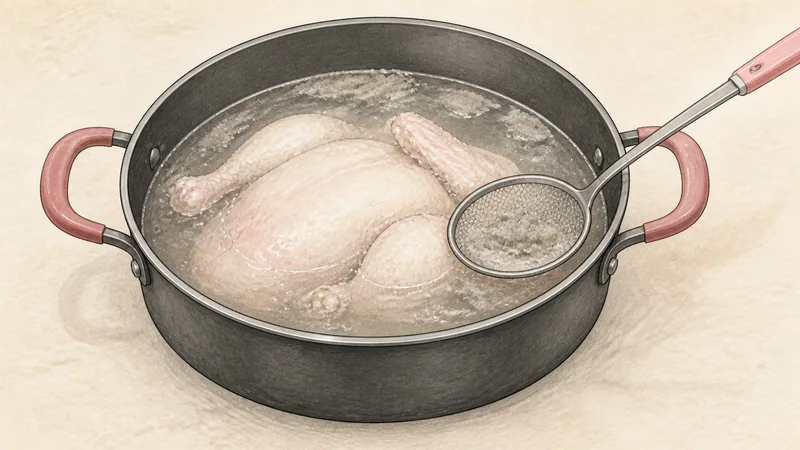
While dough rests, put chicken and 2.5 L cold water in a large pot. Bring slowly to a boil over medium heat, about 20 minutes, skimming grey foam before adding aromatics.
Cooking-step illustration, not a photograph - 05
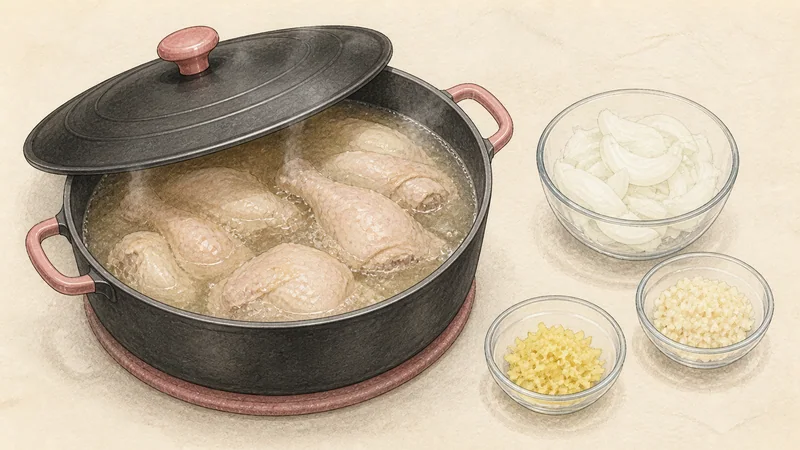
Simmer with aromatics
Add 150 g onion, garlic, and ginger. Lower to a gentle simmer, cover slightly ajar, and cook 35–45 minutes until the thickest thigh reaches 74°C and the joint moves easily.
Cooking-step illustration, not a photograph - 06
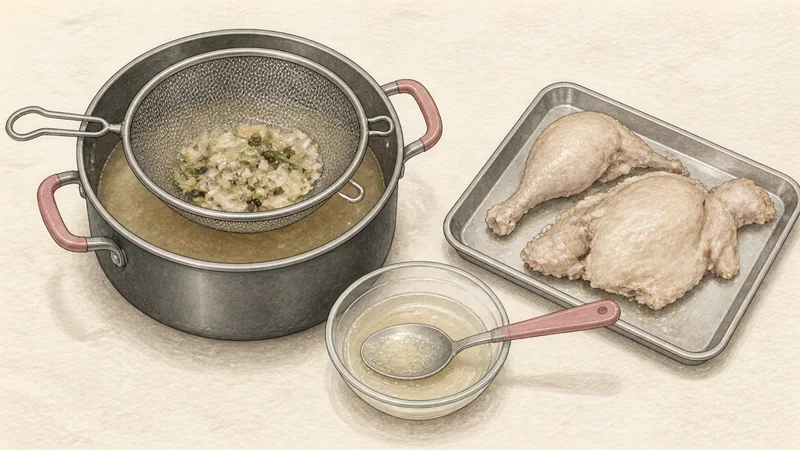
Strain and defat the broth
Transfer chicken to a clean tray. Strain broth into a clean pot, discard aromatics, and skim surface fat to leave about 15 ml; measure 1.8 L broth, adding hot water only if short.
Cooking-step illustration, not a photograph - 07
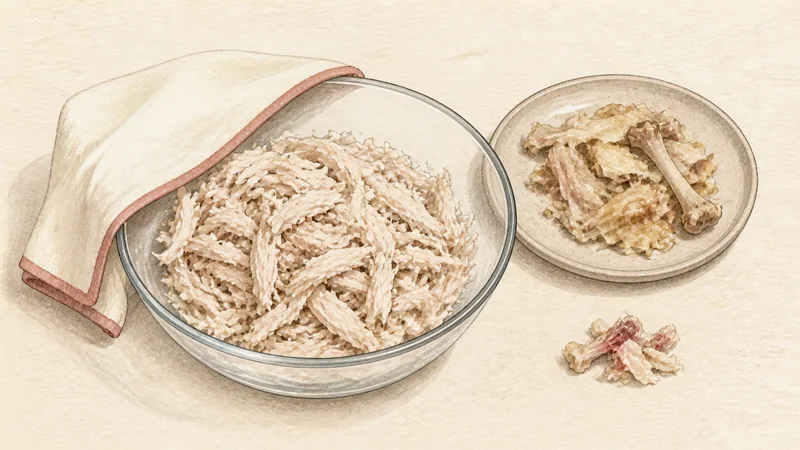
Shred the cooked chicken
When cool enough to handle, remove skin and bones and shred meat into 1 cm strands. Keep covered; discard any piece near the bone that looks raw and do not reuse the raw-meat board.
Cooking-step illustration, not a photograph - 08
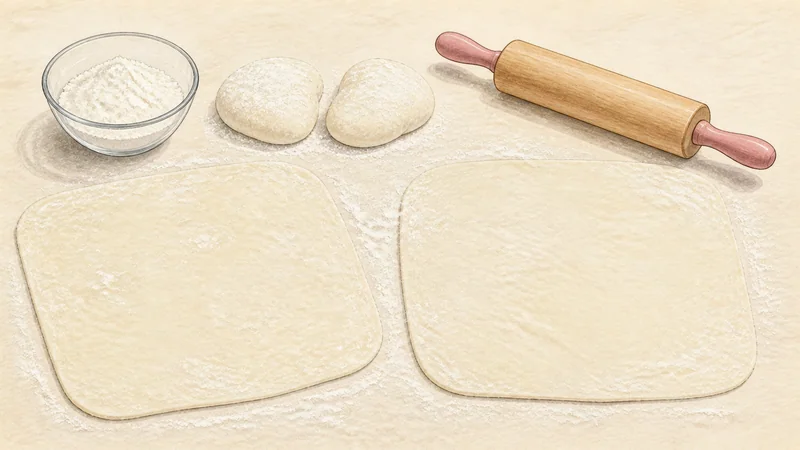
Roll the rested dough thin
Divide dough in two. Dust with 20 g extra flour per half and roll each into a roughly 35 cm square, 1.5 mm thick, turning often so it does not stick.
Cooking-step illustration, not a photograph - 09
Fold and hand-cut the noodles
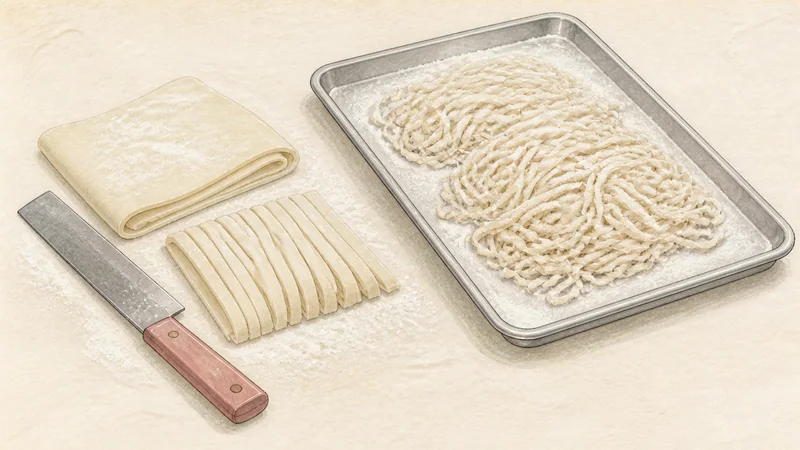
Dust each sheet lightly, fold into a loose 6 cm-wide ribbon without pressing, and cut crosswise into 5 mm noodles. Shake every strand open and spread on a floured tray.
Cooking-step illustration, not a photograph - 10
Start potato and onion in broth
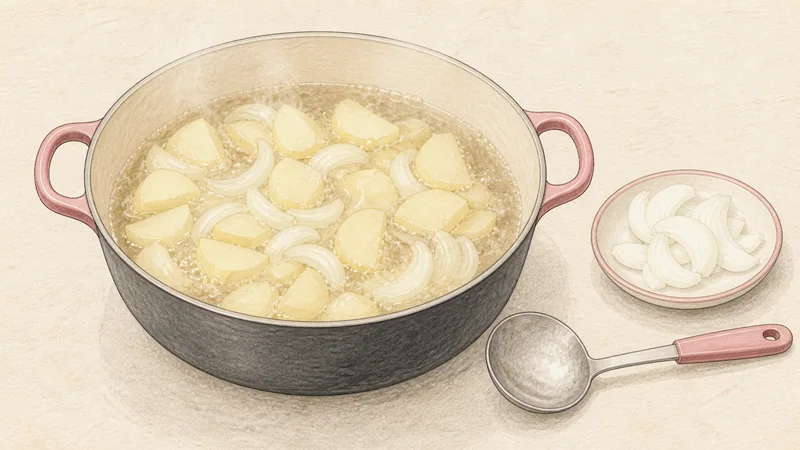
Bring the 1.8 L broth to a boil. Add potato and the remaining 100 g onion and simmer 6 minutes, until potato bends slightly but is not fully tender.
Cooking-step illustration, not a photograph - 11
Shake off flour and add noodles
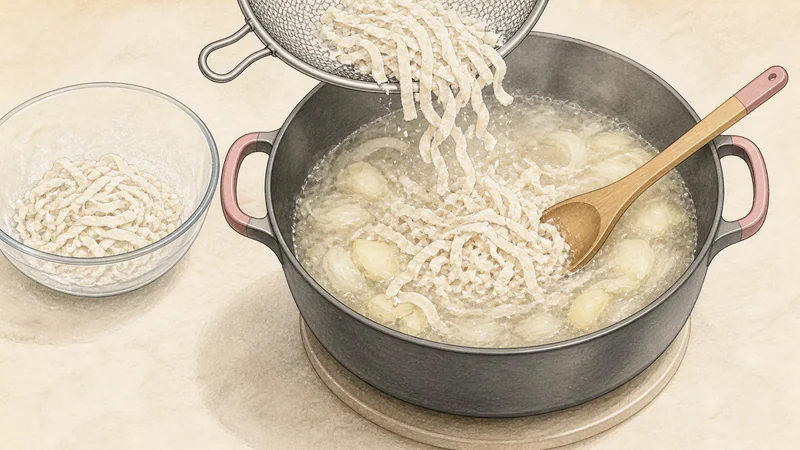
Shake excess flour from half the noodles and scatter them gradually into the boiling broth while stirring once from the base. Add the second half the same way after the boil returns.
Cooking-step illustration, not a photograph - 12
Cook noodles to a resilient centre
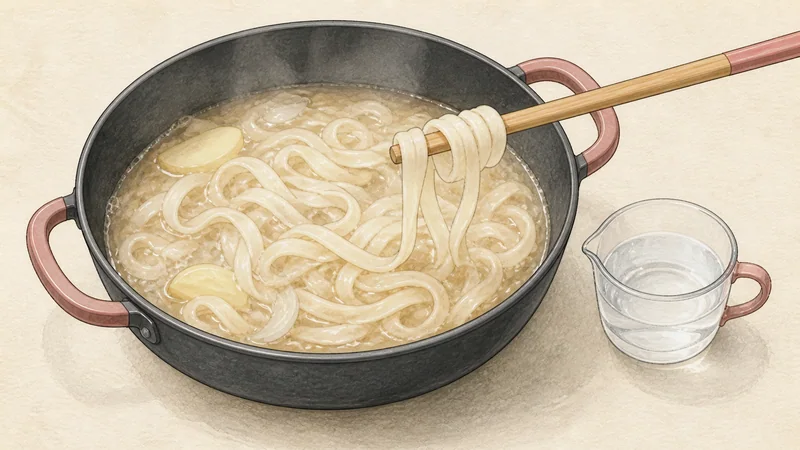
Simmer 4–6 minutes, stirring gently every minute. Test the thickest strand: it should be tender with a resilient centre and no raw flour line; add 60 ml hot water if the broth becomes too thick first.
Cooking-step illustration, not a photograph - 13
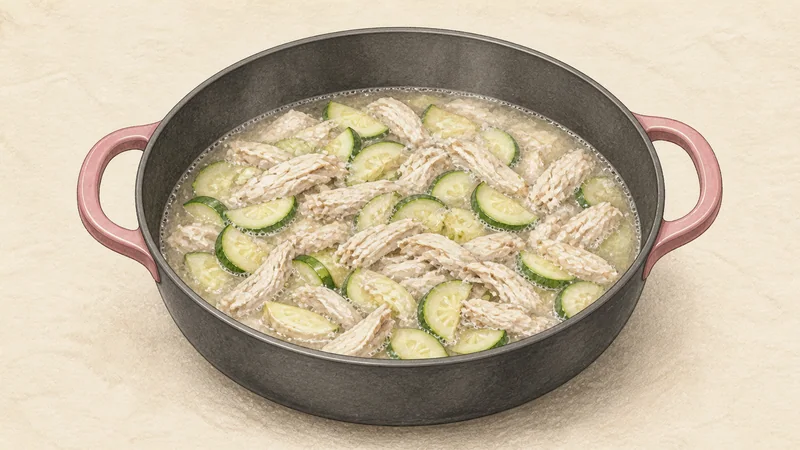
Add zucchini and chicken
Add zucchini and shredded chicken and simmer 3 minutes, until zucchini is just tender and the reheated chicken reaches 74°C throughout.
Cooking-step illustration, not a photograph - 14
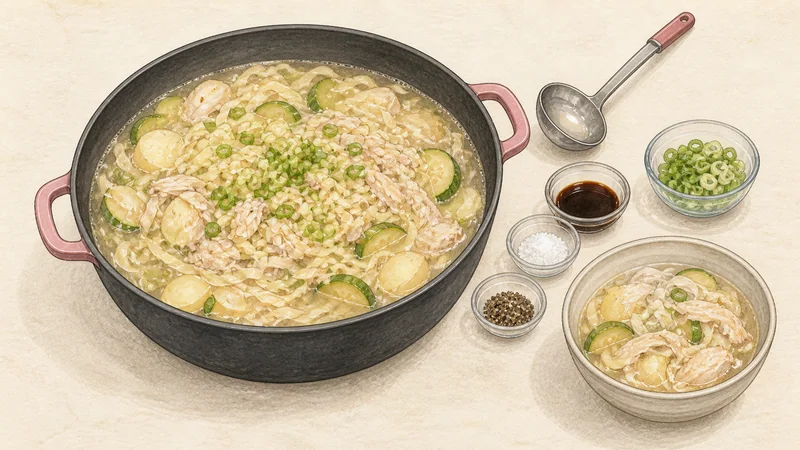
Season and serve without delay
Add soup soy sauce, remaining 5 g salt, pepper, and scallions; simmer 1 minute and taste. Divide immediately so each bowl has equal noodles, chicken, potato, zucchini, and broth.
Cooking-step illustration, not a photograph


03
Sources and photo credit
This standardized method was independently rewritten after cross-checking the references below. Recipe Nest Vault does not claim that the credited photographer cooked from this exact version.
Recipe references
Korean.noodle-Kalguksu-01 — Photograph by jslander; CC BY 2.0.
Step illustrations: Original illustrations created by Recipe Nest Vault with OpenAI image_gen.
More Korean recipes
More Korean recipes

1 hr 10 min
Vegetable bibimbap

1 hr
Beef bulgogi

7 hr